by Ellen Seidler | Copyright, Piracy, TV
 By now it’s old news that HBO’s hit series “Game of Thrones” is currently the most pirated show on TV (followed by the CBS comedy “The Big Bang Theory”). In today’s LA Times, Alexandra Le Tellier published a piece “If you want to watch ‘Game of Thrones,’ pay for it.” explaining how online piracy is not something to be celebrated, but rather an activity that ultimately undermines our art and those who toil to make it (not just the well-paid executives).
She calls out director David Petrarca, who’s directed 2 episodes of Game of Thrones, for his ill-conceived comments that the rampant piracy of the HBO series did “more good than harm” because it helped generate “buzz.” It’s a sentiment that has been echoed by others attached to the show. As I wrote in an earlier post, HBO’s programming president Michael Lombardo made similar tone-deaf comments recently in Entertainment Weekly:
I probably shouldn’t be saying this, but it is a compliment of sorts…The demand is there. And it certainly didn’t negatively impact the DVD sales. [Piracy is] something that comes along with having a wildly successful show on a subscription network.
Ms. Le Tellier argues that studios have marketing departments whose job it is to create such buzz and zeros in on the heart of the issue when she writes:
It should be up to the creators and stakeholders to decide how to distribute their programs for consumption and nurture “cultural buzz.”
Exactly! From my earlier post on Michael Lombardo’s comments regarding Game of Thrones piracy:
…a man with the stature and success of Mr. Lombardo should know better than to blabber on in such a thoughtless way about an issue, that for many filmmakers, cannot afford to be taken so lightly. Sure, it would be great if everyone had the reach and resources of HBO, but the fact is we don’t, and for us–no matter how you spin it–piracy is not a positive. The arrogance Lombardo showed in blithely dismissing piracy’s impact on HBO’s bottom line did a huge disservice to the many content creators for whom piracy negatively impacts both their bottom line and their livelihoods.
Ms. Le Tellier asks the question that so many of us do. If piracy is allowed to flourish unchecked, and even be celebrated by some, “What happens to art when artists can no longer afford to make it?” Her piece is spot on and I urge you to read it in its entirety here.

by Ellen Seidler | Copyright, Piracy, Tech

Content Creators MIA from discussions on Entertainment in the Internet Age
Heavyweights from Hollywood and Silicon Valley gathered at Stanford this week for a 2-day event called Entertainment Technology in the Internet Age (ETIA). Co-sponsored by SMPTE (Society of Motion Picture and Television Engineers) and Stanford’s SCIEN (Stanford Center for Image Engineering) the was billed as an opportunity to “…explore the tech, creative, and biz requirements for delivering a compelling, high quality, monetizable entertainment experience over the web.” From the event schedule comes this summary:
Entertainment technology development and content deployment has historically been the purview of Hollywood and traditional broadcast media. However, rapid convergence of technology improvements in connectivity, bandwidth, and media-processing coupled with consumer interest has caused a surge in media distribution over the web.
Day one program sessions included Making Content for the Internet, Distributing Content via the Internet, and an evening event “Legal and Illegal Distribution over the Internet: Can We Find Common Solution(s)? Panelists for this event included:
Mitch Singer/CTO, Sony Pictures Entertainment
Steve Weinstein/CTO, Deluxe Entertainment Service Group
Chris Odgers/VP Technology, Warner Bros.
Stephen Balogh/Technology Policy Specialist, Intel
Fred von Lohmann/Legal Director, Copyright, Google
Eric Klinker/CEO, BitTorrent
David Cardinal covered the event for extremetech.com and summarized the event this way:
Instead of threats from both sides, opening statements from Sony and Warner Brothers sounded a conciliatory note, agreeing in principal with the message from fellow panelists representing Google and BitTorrent that market-based solutions were the best way to solve the piracy problem. As the evening wore on, though, gloves started to come off, with the studios falling back on pleas for greater legal tools and the tech companies urging more of a free market approach for content distribution.
Day 2 of the event feature more on panels including the Distributing Content via the Internet (continued), Paying for Content via the Web, and Enjoying the Content (Users Experience). If you review the panelists they include, not surprisingly a who’s who of software engineers, executives from the tech and entertainment industries, and attorneys.
Given the event’s sponsors this isn’t particularly surprising. However, if we are to make any substantive progress on finding a path forward in this debate, wouldn’t it make sense to include at least some of those who actually create the content? Just a thought…
For Cardinal’s full account of the evening’s piracy discussions it’s worth reading his full story here.

by Ellen Seidler | Copyright, Law, Piracy, Politics
 The White House has released its 2013 strategic plan for intellectual property enforcement. The document is 35 pages long and outlines progress that’s been made since 2010 and goals moving forward. Included in the report is a letter to the President and Congress from Victoria A. Espinel, U.S. Intellectual Property Enforcement Coordinator, who summaries the findings and outlines progress made since the last report in 2010 which includes:
• U.S. law enforcement has significantly increased its enforcement against infringement that threatens the vitality of the U.S. economy and the health and safety of the American people. Since FY 2009
- − U.S. Immigration and Customs Enforcement (ICE)-Homeland Security Investigations (HSI) new cases are up 71 percent, arrests are up 159 percent, convictions are up 103 percent, and indictments are up 264 percent.
- − Pending Federal Bureau of Investigation (FBI) health and safety-focused investigations are up 308 percent, FBI health and safety arrests are up 286 percent, and new trade secret theft cases are up 39 percent.
- − Customs and Border Protection (CBP) and ICE seizures of infringing imports have increased
- by 53 percent.
• Private sector companies have voluntarily agreed to adopt best practices aimed at curbing the
sale of counterfeit goods and reducing online piracy. For example:
- − American Express, Discover, eNom, Facebook, Go Daddy, Google, MasterCard, Microsoft, Neustar, PayPal, Visa, and Yahoo! established the Center for Safe Internet Pharmacies—a new non-profit to combat fake online “pharmacies” selling dangerous illegal drugs over the Internet.
- − AT&T, Cablevision, Comcast, Time Warner Cable, Verizon, and major and independent music labels and movie studios entered into a voluntary agreement to reduce online piracy. Under the agreement, Internet Service Providers (ISPs) will notify subscribers, through a series of alerts,when their Internet service accounts appear to be misused for infringement on peer-to-peer networks.− American Express, Discover, MasterCard, PayPal, and Visa agreed to a set of best practices to withdraw payment services for online sales of counterfeit and pirated goods.
- − The Association of National Advertisers and the American Association of Advertising Agencies issued a leadership pledge to not support online piracy and counterfeiting with advertising revenue.
I’m particularly interested in reviewing what said about the efficacy of the private sector’s “voluntary…best practices” approach to see what progress has been made, and whether it jibes with what’s really happening online with regard to piracy, counterfeiting, etc. I’ll more on my thoughts once I’ve had the opportunity to review the entire report.

by Ellen Seidler | Copyright, Law, Politics
Terry Hart takes the EFF to task for their misleading take on copyright history
Copyhype blogger Terry Hart wrote a thoughtful response yesterday to an post on the Electronic Frontier Foundation’s blog by Mitch Stoltz that purported to be analysis (and rebuttal) of what he called the MPPA’s “copyright agenda”. The piece published Monday was in response to MPAA CEO Chris Dodd’s recent remarks at a L.A. Copyright Society event earlier this month. Dodd said:

What would Jefferson think about the current state of copyright law?
First, the men who met in Philadelphia during that summer of 1787 and drafted the Constitution, considered copyright so important to unlocking the creative potential of the citizens of this new country, that they explicitly empowered Congress to incentivize creativity through patent and copyright legislation.
According to Stoltz’s EFF’s piece, the MPAA chief got it wrong.
Dodd claims that copyright as we know it is what “the founders of this republic intended.” Hardly. The first copyright act in the U.S, passed in 1790 by some of the same people who helped write the Constitution and the Bill of Rights, was very limited. It covered only books, maps, and charts – not music, theater, pamphlets, newspapers, sculpture, or any other 18th-century creative medium. The Founders’ copyrights lasted 14 years, with an option to renew for another 14. Today, of course, copyright covers nearly all written, visual, sculptural, architectural, and performing art, not to mention computer software and games, and it lasts for the author’s life plus 70 years. We suspect that if anyone had described today’s copyright system to, say, Thomas Jefferson, he would have been shocked. By all means, let’s look at how the Founders thought copyright should work, as one guidepost for fixing today’s law.
But according to Terry Hart, in this case, it’s really the EFF that got it wrong by conveniently ignoring the complete copyright picture as it’s evolved over time:
What’s curious is that the EFF would focus so much on the provisions rather than the principles of early U.S. copyright law (never mind how incorrectly they stated the former) yet leave out so many provisions in current copyright law that the early acts lacked. For example, the 1790 Copyright Act included no statutory recognition of fair use, the first sale doctrine, or the idea/expression dichotomy; no prohibition on protecting government works by copyright;13 no exceptions for libraries, educational institutions, or non-profit groups; no centralized registration system or deposit requirement.
The grave inaccuracies contained in just a few short sentences should leave little surprise that the EFF is on shaky ground concluding that their views on copyright would be compatible with the Founders…
You can read Hart’s full piece here. It’s well worth it if you’re looking for a more balanced perspective on what the true intent of our founding fathers may have been when it comes to copyright.

by Ellen Seidler | Copyright, Law, Piracy, Politics, Tech
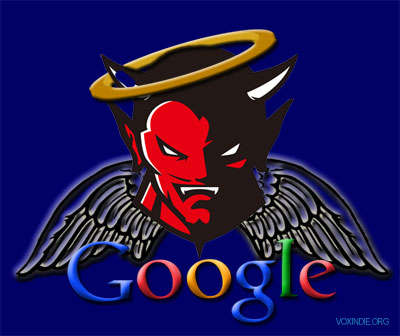
 It’s no coincidence that Google’s attempting to grab the tech news headlines with blog posts this week trumpeting the company’s ongoing efforts to fight the scourge of online child porn and illegal pharmacies. Google’s links to illegal and unsavory activities is long established, but with increased public scrutiny thanks to the NSA snooping stories and declarations like that of Mississippi Attorney General Tom Hood asserting Google’s search aids online criminals, it seems that Googleiath’s powers that be felt the time had come for some much-needed reputation burnishing.
And so, this week we have not one, but two new Google blog posts that are designed to grab the news cycle and put the Silicon Valley giant in a more favorable light. Never mind that most of it’s really just old news repackaged to fit their latest PR campaign. The first PR blast came Saturday via this post, trumpeting Google’s role in the battle against child pornography online.
Google has been working on fighting child exploitation since as early as 2006 when we joined the Technology Coalition, teaming up with other tech industry companies to develop technical solutions. Since then, we’ve been providing software and hardware to helping organizations all around the world to fight child abuse images on the web and help locate missing children.
There is much more that can be done, and Google is taking our commitment another step further through a $5 million effort to eradicate child abuse imagery online. Part of this commitment will go to global child protection partners like the National Center for Missing & Exploited Children and the Internet Watch Foundation. We’re providing additional support to similar heroic organizations in the U.S., Canada, Europe, Australia and Latin America.
Since 2008, we’ve used “hashing” technology to tag known child sexual abuse images, allowing us to identify duplicate images which may exist elsewhere. Each offending image in effect gets a unique ID that our computers can recognize without humans having to view them again. Recently, we’ve started working to incorporate encrypted “fingerprints” of child sexual abuse images into a cross-industry database. This will enable companies, law enforcement and charities to better collaborate on detecting and removing these images, and to take action against the criminals. Today we’ve also announced a $2 million Child Protection Technology Fund to encourage the development of ever more effective tools.
While it goes without saying that any effort to battle child pornography is laudable, and it’s great that the company is “making news” by donating 2 million more to the cause, but in my (cynical) view this donation appears to not to be driven by altruism, but is more likely born from a not-so-subtle desire to rub elbows with “heroic” organizations and in order to generate positive media buzz for a company facing increasing criticism over its handling of privacy and piracy/counterfeiting issues. Google’s assertion that it employs “hashtag” technology to identify and block offending imagery also raises the question as to why they can’t do more to prevent pirated content from appearing in their search results? Oh, but I digress….
Then today, the Google PR machine was back in action with this post outlining supposedly ongoing efforts to battle illegal (rogue) online pharmacies also appears to be part of their efforts to burnish their increasingly tattered reputation:
For the last several years, Google has worked closely with a number of organizations, government agencies, and businesses to combat rogue online pharmacies from all angles.
Collectively, we are making it increasingly difficult for these operators to effectively promote their rogue pharmacies online. A variety of websites and web services are refusing ads from suspected rogue pharmacies. Domain name registrars are removing suspect rogue pharmacies from their networks. Payment processors are blocking payments to these operators, and social networking sites are removing them from their systems too.
Again, there’s nothing “new” here, really just the same old, same old. It’s also particularly ironic to see Google patting itself on the back for behavior that has not been voluntary. Wasn’t Google the company that in 2011 paid the feds a
half a billion dollar settlement to close a Justice Department investigation into its role in serving and profiting from illegal pharmacy ads. How does that jibe with them combatting
“rogue online pharmacies” for the
“past several years?”Oh, and just a week ago the company was
called out by Mississippi’s attorney general Jim Hood who asserted:
Google’s search engine gave us easy access to illegal goods including websites which offer dangerous drugs without a prescription, counterfeit goods of every description, and infringing copies of movies, music, software and games.
If Google is doing such a great job, why hasn’t anything really changed? When will enough be enough? How long can the company keep tap dancing around land mines before it’s forced to reckon with the fact it enables and profits from a plethora of illegal, online enterprises? If technology can be used to battle child pornography, why not employ it to battle other illegal online activities?
There are plenty of examples of Google enabling and profiting from online crime. I outlined some in a blog post earlier this year, “Chronic, Ill-Gotten Gains–Google’s Web of Piracy Profit” and have also written others:

 By now it’s old news that HBO’s hit series “Game of Thrones” is currently the most pirated show on TV (followed by the CBS comedy “The Big Bang Theory”). In today’s LA Times, Alexandra Le Tellier published a piece “If you want to watch ‘Game of Thrones,’ pay for it.” explaining how online piracy is not something to be celebrated, but rather an activity that ultimately undermines our art and those who toil to make it (not just the well-paid executives).