PayPal has finally ceased doing business with Kim Dotcom’s Mega site and he’s pouting about it. The man who has made millions be monetizing content stolen from others continues to assert that Mega is a legit cloud-based serviceand that its operations are legal. A statement posted on the site announcing that, “PayPal has ceased processing MEGA customer payments effective immediately…” also makes the claim that the cyberlocker site is being unfairly targeted:
MEGA has demonstrated that it is as compliant with its legal obligations as USA cloud storage services operated by Google, Microsoft, Apple, Dropbox, Box, Spideroak etc, but PayPal has advised that MEGA’s “unique encryption model” presents an insurmountable difficulty. The encryption models claimed by various USA and other entities apparently do not represent any problem to PayPal or the parties behind PayPal.
Nice try but even if you dress a wolf in sheep’s clothing he’s still just a wolf. It’s important to note that Mega rose from the ashes of Megaupload, the granddaddy of cyberlockers where the piracy for profit model was perfected and later copied by dozens of other online entrepreneurial thieves. After the feds shut the site down in January of 2012, Dotcom got busy working a better way to circumvent copyright law and a year later launched a more nefarious piracy for profit site named Mega. The site uses encryption technology to protect its users (and site operators) from prying eyes. Dotcom claims Mega is full of folks’ baby pictures and the like, but in reality its business model continues to provide pirates with a profitable, and protected, haven for their transactions.
Until PayPal’s recent departure, officials at Mega even pointed to the relationship with the payment processor as a sign that Mega was “legit.” In response to charges in a study published last September by NetNames and the Digital Citizens Alliance, Mega CEO Graham Gaylard told TorrentFreak:
“We consider the report grossly untrue and highly defamatory of Mega…Mega has been accepted by PayPal because we were able to show that we are a legitimate cloud storage site. Mega has a productive and respected relationship with PayPal, demonstrating the validity of Mega’s business…”
For the past few years payment processors like Visa, Mastercard and PayPal have come under increasing scrutiny for their role in facilitating (and profiting from) pirate-linked transactions. Following publication of the NetNames study, Senator Patrick Leahy, Chairman of the Senate Judiciary Committee at the time, sent letters to the head of both Mastercard and Visa urging that the companies sever ties with piracy operations.
I’ve been reporting on this issue since 2010, and while some progress has been made as processors have severed ties with many of the worst offenders, much work remains. According to the study, PayPal was singled out for its business dealings with Dotcom:
PayPal was offered as payment option on only one site (Mega). This represents a major change in the cyberlocker universe compared to just three years ago. The fact that the vast majority of cyberlocker sites do not attempt to take PayPal through hidden or disguised means demonstrates that the payment method is not even considered as an option for accepting subscription payments.
Dropvideo still depends on PayPal
Apparently PayPal officials finally decided that doing business with Mega was no longer an option. Unfortunately, aside from Mega, PayPal’s involvement with pirate sites persists and extends beyond offering subscribers a way to pay for services.
PayPal remains an important cog in the the flow of money that’s central to the business model Dotcom perfected on Megaupload. It was essentially a pyramid scheme as I explained in this blog post from 2011. Basically, cyberlocker affiliates provide the fuel that drive the piracy machine. Individuals sign who up to be cyberlocker affiliates earn money for uploading (stolen) content based on the number of times a file was downloaded. They can also earn commissions for attracting other to enroll in various cyberlocker account offerings. Affiliate payments continue to be the lifeblood that sustain the cyberlocker eco-system and PayPal continues a popular means for affiliates to receive payment for their role in bringing traffic to sites. According to the NetNames report:
…PayPal is still used by some sites for affiliate or reward scheme payments. Of the thirteen sites that offered an affiliate scheme, eight (61.5 percent) offered PayPal as a way for affiliates to receive their payments (other online payment systems such as WebMoney and Payza were also used but PayPal was the most popular).
This morning I took a quick look at Dropvideo.com, a cyberlocker I’d recently sent DMCA notices to. Sure enough, they use PayPal for their affiliate payments. So while PayPal has distanced itself from Mega, the company still has a long way to go to clean up its dirty piracy profits.
This despite the fact American audiences are increasingly diverse. Darnell Hunt, director of the Bunche Center, and the report’s lead author points out the contradiction:
Television shows that reflect American diversity and films that reflect American diversity do better at the box office, TV shows do better in terms of ratings…There’s a disconnect between what sells and what Hollywood is doing in terms of business practices.
Interview with study co-authors Darnell Hunt and Ana-Christina Ramon
Should this disconnect persist, the Hollywood business model could take a hit according to the report’s authors:
…business as usual in the Hollywood industry may soon be unsustainable. Evidence from this report (and its predecessor in the series) shows clearly that America’s increasingly diverse audiences prefer diverse content created with the input of diverse talent. Diversity sells.
Viewers like diversity, with broadcast scripted shows 41 percent to 50 percent diversely cast scoring the highest ratings in black and white households alike in 2012-13, while on cable, white and Latino viewers preferred casts with 31 percent to 40 percent diversity. Black households preferred cable shows with more than 50 percent diversity…
What about the brave new world of digital programming? Has this new “Golden Age of Television” created golden opportunities for women and minorities to shine? In a word, no. According to the report, while only 11.2% of directors for cable scripted shows are women, they fare even worse in digital, directing fewer than 10% of episodes. Figures for minority-directed programming in both categories are equally anemic. It should also be noted that female and minority representation in both above-the-line and below-the-line roles would be even more dismal were it not for programs like Netflix’s Orange is the New Black or Hulu’s East Los High.
For those concerned about this issue–and everyone who works in the business should be– it’s worth taking time to entire report, and review the compelling statistical analysis based on 2012-2013 data (from various sources) that’s broken down into following categories: theatrical films; broadcast scripted shows; broadcast reality and other shows; cable scripted shows, cable reality and other shows; digital platform and syndicated.
How to change these long-held patterns in Hollywood, or “flip the script” as the report suggests? Its authors admit there’s no “magic bullet” to cure Hollywood’s ills, noting it’s a “multi-dimensional” problem with no easy solutions.
“It’s a high-risk industry. People want to surround themselves with collaborators they’re comfortable with, which tends to mean people they’ve networked with — and nine times out of 10, they’ll look similar. It reproduces the same opportunities for the same kind of people: You’re surrounding yourself with a bunch of white men to feel comfortable.”
Real progress will require continued efforts on many fronts from executive offices to back-lots. It’s a daunting task that the report summarizes this way:
In the end, every industry stakeholder-individual and institutional-has a role to play if meaningful industry advancement is to be achieved on the diversity front. Broadcast networks must begin to treat the airwaves as a public good through which diverse content promotes profits and democracy. Studios must cast the net much more widely when they entertain pitches for film and television projects. Talent agencies must diversity their rosters, packaged products and their own ranks. The film and television academies must overhaul their memberships. The guilds must better understand their respective membership pipelines and find ways to increase access and professional development for minorities and women. Individual producers and writers must finally accept the notion that having diverse voices and perspectives in the room actually increase their odds for success.
Here’s hoping that the Bunche Center next Diversity Report gives us better news. It can’t get much worse.
Netflix doesn’t pay for all the content it allows subscribers to stream
VPNs make it easy for Netflix subscribers to watch movies and TV shows that aren’t licensed in their country
source: http://www.nasdaq.com/
Netflix profits grow as its brand spreads around the world–but who’s paying the price?
In January the popular online streaming service claimed its subscriber base had grown to nearly 60 million worldwide. Although nearly 3/4 of those are in the U.S., Netflix has already extended its reach to 50 countries and by 2017 has plans to expand to 200. Just this past week Netflix opened up shop in Cuba.
As Netflix grows, so too should the amount of money filmmakers earn right? Well, no…not really. Enter the VPN, or virtual private network, a simple technology that allows internet users to access geo-blocked websites by providing access via a local IP address. Also known as “tunneling,” a VPN makes it easy to jump virtual fences.
How does it work? Let’s say I want to watch a movie that isn’t available via my Netflix account in the U.S. but it is available on Netflix’s Danish site. With the help of a free browser plugin that takes just seconds to install, I can click a button and surf the web from an IP address in Denmark. When I go to Netflix.com/dk/ and login using my U.S. account, and voilá–I can stream the program (see example above).
Why is this a problem? After all, I have a legit, Netflix account which I pay $8.99 per month for, so why shouldn’t I be able to watch content via Netflix portals around the world? It’s a problem because while I’m happy as consumer to watch a film via Netflix sites worldwide, those who actually paid to produce it are financially left out in the cold. For Netflix it can be viewed as a win, win. Netflix pays for U.S. rights, but forgoes purchasing rights elsewhere knowing full well its subscribers worldwide can still watch. Netflix profits grow at the creators’ expense.
This scenario also hurts smaller distributors of independent film who negotiate with Netflix to license titles for streaming rights in their territories. Why should Netflix worry about spending more money to (legally) acquire rights for from distributors operating in small territories when subscribers can happily watch their films on U.S. Netflix via a VPN?
As Netflix expands offerings to attract subscribers worldwide who pays the price?
How much of an impact might this type of VPN pirate viewing be? GlobalWebIndex, a UK firm, estimates that some 54 million people access Netflix via VPNs each month, 21.6 million of them from China alone. How do subscribers in China get Netflix accounts in the first place? It’s easy using PayPal or other payment method like a virtual credit card. Apparently Netflix doesn’t dig too deep–since it can pocket more cash and grow its brand to reach markets outside its realm. Why should the company crack down on a winning, albeit slimy, way to attract customers?
There was some speculation that Netflix was changing course when it reportedly tweaked its Android app to make accessing content via illegitimate VPNs more difficult, but according to the BBC company officials denied reports that it has changed its approach:
“The claims that we have changed our policy on VPN are false,” said Netflix’s chief product officer Neil Hunt.
…”People who are using a VPN to access our service from outside of the area will find that it still works exactly as it has always done.”
According to Variety, Netflix supposedly employs other methods to thwart subscribers who don’t belong:
Netflix has always tried to block such unauthorized access, via a multistep verification process that encompasses credit card info, mailing addresses and Internet addresses.
“You may view a movie or TV show through the Netflix service primarily within the country in which you have established your account and only in geographic locations where we offer our service and have licensed such movie or TV show,” the company’s terms of use say. “Netflix will use technologies to verify your geographic location.”
Despite company claims to the contrary, this morning, as I sat at computer to write this post I found it only took me seconds to login to Netflix sites in the UK, Denmark, Cuba and Brazil. Instead of blocking me, a pop-up window politely explained since I was “traveling with Netflix” I might notice a different offering of movies, etc. Of course, one could ask shouldn’t I be able to travel with Netflix? Of course that should be OK, but the problem is, using a VPN I can travel with them while seated at my home computer.
In fact, in order to confirm that I had full, unfettered access to geo-blocked content I searched for a TV series unavailable in the U.S. I chose the Danish series Den som dræber (Those Who Kill) I own on dvd. By selecting Denmark via the VPN (see graphic at the top of post) I was able to log into Netflix.dk and easily stream the program. Question is, are the producers of the program being paid by Netflix for viewers, like me, who watch outside of Denmark? I believe the answer is no.
Generally distributors receive a flat fee for programs/films Netflix adds to its catalog. Rights are given for specific territories and, while sometimes rights are worldwide, often they’re restricted. Why not just give Netflix worldwide rights? Well, easier said than done.
Contrary to the rhetoric promoted by piracy apologists, financing TV and films productions is not a simple task. In many cases foreign rights pre-sold as part of financing deals cobbled together to cover the costs of production. Without such agreements many of the films and TV shows we enjoy could never be made. So for now, when it comes time to distribute them, these financing packages are invariably part of the equation. It often means a single entity doesn’t hold all the (territorial) distribution cards, hence the complexity.
However, with VPNs, Netflix doesn’t have to make negotiating territorial rights a priority. By not restricting the use of VPNs and indirectly allow users to watch programming they aren’t paying for, Netflix can continue to grow its subscriber base and pocket more profit. Why pay the producers of Den som dræberfor U.S. rights when U.S. viewers, using their VPN, can use their accounts to watch it anyway?
Emails uncovered in the Sony hack show that Netflix do-si-do around the geo-blocking issue is of growing concern to producers and distributors. As noted in a recent piece by Sean Gallagher in Ars Technica:
The latest data leaked from Sony Pictures Entertainment by hackers reveals that Sony executives had accused Netflix of breaching its licensing contract for Sony Pictures Television (SPT) shows by allowing customers in foreign markets to use virtual private networks to stream them, calling it piracy that is “semi-sanctioned by Netflix.”
Sony pressed Netflix for increased “geofiltering” control over its customers to prevent the practice, including restricting payment methods for the service to ways that would allow screening for customers living outside countries where Netflix had contractual rights.
Gallagher quotes a hacked email between Sony Pictures Television’s president, international distribution,Keith LeGoy and the division’s president, Steve Mosko that outlines concerns over Netflix’s tacit acceptance of VPN abuse:
Netflix are [sic] heavily resistant to enforcing stricter financial geofiltering controls, as they claim this would present a too high bar to entry from legitimate subscribers. For example, they want people to be able to use various methods of payment (e.g. PayPal) where it is harder to determine where the subscriber is based. They recognize that this may cause illegal subscribers but they (of course) would rather err that way than create barriers to legitimate subscribers to sign up.
…Netflix of course get to collect sub revenues and inflate their sub count which in turn boosts their stock on Wall St., so they have every motivation to continue, even if it is illegal…
So what to do? Clearly, there’s a problem. In certain situations VPNs can be a good thing, particularly for those who live in places like China where access to web services is routinely restricted by government firewalls. However, when tens of millions of Netflix subscribers are using VPNs to access unlicensed content it’s clear that the company isn’t doing enough to make sure that content creators receive fair compensation.
Netflix isn’t cracking down on VPN use because it’s good for (their) business
When Australian journalists attending the recent Consumer Electronics Show in Las Vegas tried to ask Netflix officials about a VPN crackdown reported by Torrent Freak, they were rebuffed–even though, according to an article on news.com.au, “An estimated 200,000 Australians pay for Netflix subscriptions, and access the service by masking their computer’s location so they appear to reside in America.”The story also notes:
The movie giant is due to launch its service in Australia this March, but many of its popular shows including Orange is the New Black and Better Call Saul, are unlikely to screen on the local service due to licensing agreements, potentially providing little incentive for existing subscribers to switch.
It’s yet another tangible example of how a program’s producers may be left holding the bag. Netflix gets 200,000 paid subscribers from Australia, but it doesn’t have to pay the filmmakers for rights to their films in that territory.
Some make the argument that overall, Netflix is a good online influence and has helped diminish the lure of piracy, because, as this piece in Billboard explains, it offers consumers, “Content, value and ease of use.” While that’s mostly true, it’s really a tangential issue and certainly doesn’t exempt Netflix’s business practices from scrutiny. Nor does the fact that Netflix has opened the door to new creative possibilities–both in terms of production and distribution. Creators are justified in demanding that the content Netflix subscribers stream is actually paid for–otherwise it becomes just another variant of (corporate) piracy.
What next? Well, as moves forward its with global expansion plans, either Netflix needs to spend some of its profit to find a way to begin effective geo-blocking, or–if that’s not possible–find another formula to calculate a fair price for content that factors in total (worldwide) views, VPN or no VPN. It might be a bitter pill for stockholders to swallow, but for now, it’s the only legitimate way forward.
East Bay Ray calls out Google’s effort to close the door on an investigation into its bad business practices
Mississippi Attorney General Jim Hood has been looking behind the Silicon Curtain that surrounds Google in an effort to shine a spotlight on the company’s suspect business practices. Not surprisingly, his investigation has raised the hackles of the internet behemoth and its bevy of Astroturf allies. I wrote about those legal machinations a bit last week, but today, East Bay Ray (guitarist, co-founder and one of two main songwriters for the band Dead Kennedys) has written a piece published today in The Hill that’s a must read. As he notes:
…In response, Google has shown what can only be described as an ultimate display of chutzpah. The company has sued Hood, calling his actions “enormously burdensome” – or, in other words, a pain in the a–. Google’s actual suit claims that there is a federal law that trumps Hood’s legitimate questions about Google’s impact on the health and well-being of his state’s citizens.
Google has no problem sharing every scrap that can be found on me, my friends, my family, or anyone else who has even had their name appear in a document. So the company that has made a fortune on searches doesn’t want to be searched.
Google may have the support of those organizations it helps fund like the Electronic Frontier Foundation and the Center for Democracy & Technology, but Attorney General Hood has the support of artists like East Bay Ray–and many others–who have seen their livelihoods leached away as the Google profit-machine churns online content and advertisements of dubious–often illegal–origin to fill its coffers.
EFF, Center for Democracy & Technology and Public Knowledge fail to mention they receive money from Google
The pro-Google brief begins by providing summaries of its various signatories. It’s no surprise that each and every description fails to mention organizational ties to Google. Leading off the parade of disingenuous descriptors is the EFF:
The Electronic Frontier Foundation (“EFF”) is a non
-profit, member-supported civil liberties organization that works to protect free speech, innovation, and privacy in the online world.
Funny that on its own website the EFF describes itself as a “”a donor-funded US 501(c)(3) nonprofit organization.”For the purposes of the brief, of course, characterizing itself as simply “member-supported” provides a more innocent, public-interest veneer. In either case, if one attempts to discover exactly where the EFF gets its money, by reviewing the organization’s latest–though somewhat outdated–financial data (from 2012-2013) it seems the actual identities of donors are (conveniently) obscured.
In a 2012 article for Fortune Magazine, Matt Vella noted that money from Google (and other tech firms) does flow directly into EFF’s coffers.
If the Electronic Frontier Foundation, the nation’s preeminent digital rights nonprofit, had disclosed last year that it received a cool $1 million gift from Google — about 17% of its total revenue — some eyebrows might have been raised. The group typically describes itself as “member-supported” and, like most nonprofits, it treasures its above-the-commercial-fray, public-interest-group aura and reputation for independence.
Vella also pointed out, “The EFF, CDT, and Stanford’s CIS all reliably line up on the tech sector side in scrimmages with copyright holders.” Why bite the hand that feeds you?
Google actually makes no bones about the support it provides for both the EFF and The Center for Democracy and Technology in a listing on its own website:
Our U.S. Public Policy and Government Affairs team provides support to a number of independent third-party organizations whose work intersects in some way with technology and Internet policy.
There’s also a little footnote in the amicus brief worth noting:
No one, except for undersigned counsel, has authored this brief in whole or in part or contributed money toward the preparation of this brief.
Yeah, right….One has to appreciate the legal jiu jitsu employed in this misleading caveat. Perhaps Google didn’t directly underwrite the brief, but it’s clear who pays (some of) the bills. As such, it’s no surprise that legal arguments cited in the brief include the well-worn don’t blame Google for the behavior of others gambit:
Simply put,requiring online service providers [like Google] either to respond to subpoenas directed primarily at third-party conduct—or to engage in protracted and expensive litigation to challenge their propriety—could result in extraordinary costs for those providers.
Last time I checked, it was Google that admitted culpability when it coughed up $500 million to pay a fine for knowingly earning profits from advertising for illegal drugs online.
The federal investigation, which was first revealed in May, found that Google was aware that some Canadian pharmacies that advertised on its site failed to require a prescription for substances like the painkiller Oxycontin and the stimulant Ritalin. Google continued to accept their money and assisted the pharmacies in placing ads and improving their Web sites, according to the Justice Department. –NY Times
This type of Google behavior is exactly what Attorney General Hood is investigating. It’s difficult to feel any sympathy for the fact Google may face extraordinary costs to protect its equally extraordinary (and nefarious) profits. It’s no surprise that those victimized by Google’s profit-machine support Hood’s efforts to pull back the curtain on its shady business practices. Why wouldn’t they?
Though it makes nice talking points, the crux of the amicus brief argument seems to be that Google shouldn’t bear any responsibility for bad (illegal) behavior within its online operations, even when it knowingly encourages and benefits from such behavior. Not only are the messengers suspect, but their mendacious argument is irretrievably tainted, bought and paid for by Google itself–no matter that a footnote disclaimer may claim.
Moving now back to the Google v. Hood amicus briefs, Google came up with two that we are aware of–one was filed in support of Google by the Consumer Electronics Association, the Computer & Communications Industry Association and Engine Advocacy (where Julie P. Samuels–remember her from the Google Shill List–is Executive Director). Each organization is funded by Google. The CEA and CCIA alone lobby for companies whose combined market cap surely has to be somewhere around $2 TRILLION….
In other words, the two amicus briefs filed in support of Google’s attempt to stop a criminal investigation were filed solely by organizations that receives funding from Google both directly and indirectly and in some cases has received that funding for many years. Even in the world of Google influence buying where organizations seem to be created by binary fission straight out of the Benjamins, this is an odd result.
The Trichordist post also references a recently released Public Citizen study, Mission Creepy noting that it provides “a great guide to Google’s labyrinthine influence buying.” I’ll leave you with these chilling words from that study:
…the amount of information and influence that Google has amassed is now threatening to gain such a stranglehold on experts, regulators and lawmakers that it could leave the public powerless to act if it should decide that the company has become too pervasive, too omniscient and too powerful.
As an indie film and broadcast journalism veteran, I'll share my perspectives on issues of interest to the creative community and beyond--Ellen Seidler


 PayPal has finally ceased doing business with Kim Dotcom’s Mega site and he’s pouting about it. The man who has made millions be monetizing content stolen from others continues to assert that Mega is a legit cloud-based service and that its operations are legal. A statement posted on the site announcing that, “PayPal has ceased processing MEGA customer payments effective immediately…” also makes the claim that the cyberlocker site is being unfairly targeted:
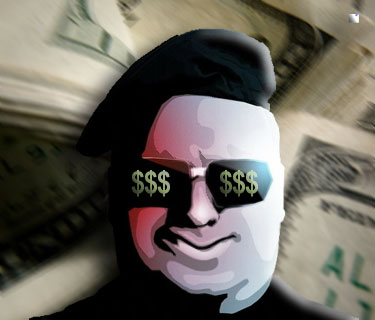 After the feds shut the site down in January of 2012, Dotcom got busy working a better way to circumvent copyright law and a year later launched a more nefarious piracy for profit site named Mega. The site uses encryption technology to protect its users (and site operators) from prying eyes. Dotcom claims Mega is full of folks’ baby pictures and the like, but in reality its business model continues to provide pirates with a profitable, and protected, haven for their transactions.


